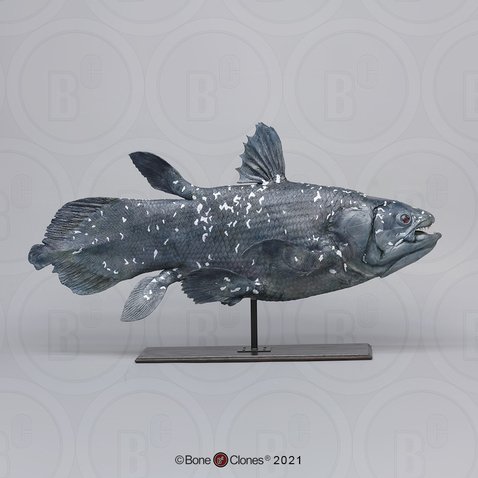
Coelacanth
The first Coelacanth fossil was discovered in 1839. This is a what evolutionist have said about the coelacanth in the fossil record: “ Well-represented in freshwater and marine deposits from as early as the Devonian period (more than 410 million years ago), they were thought to have become extinct in the Late Cretaceous, around 66 million years ago”.
This was until 1938 when a live coelacanth was caught in a trawlers net off the coast of South Africa. Since that time other populations of coelacanths have been discovered.
A rescuing device evolutionist often evoke is “statsis”. It has been explained as no or little change to a species over deep time.
“Despite its being extremely similar to its living relatives, the authors write: ‘Its morphological similarity to recent coelacanth discoveries … demonstrates evolutionary stasis within the group”
The term ‘double-speak’ is often used derisively of politicians, journalists and spokespersons for large corporations. People are guilty of double-speak if they use language that serves to distort or disguise the facts.
In fact, the well-known evolutionist Richard Lewontin, believing that the end justifies the means, once admitted, ‘Scientists, like others, sometimes tell deliberate lies, because they believe that small lies can serve big truths.’12 However, something is either true—that is to say, genuine, verified fact—or else it is false. So-called ‘degrees of truth’ simply don’t exist.
12-Lewontin, R., The Inferiority Complex, New York Review of Books, p. 13, 22 October 1981. Return to text
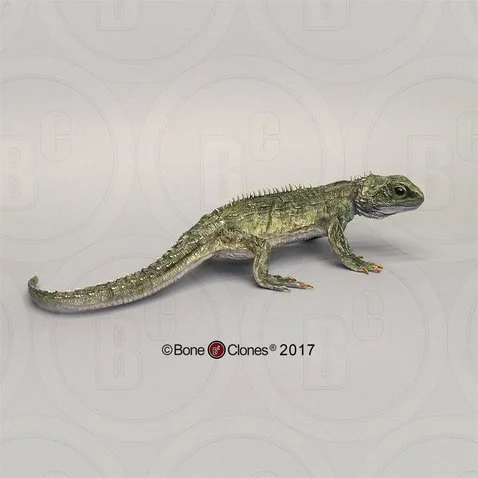
Tuatara
It looks like a lizard, but it croaks like a frog. It can go for an hour without taking a breath. And it is commonly said to live up to 300 years.
There are many unusual features about this reptile called a tuatara, which is now found only on a few rocky offshore islands in New Zealand. It can withstand temperatures as low as 7 deg. C (45 deg. F)—which is the lowest temperature recorded by any reptile. In these cold conditions its movements become so slow it has been known to fall asleep in the middle of munching a mouthful of insects.
The tuatara can reach a length of 60 cm (two feet), and often shares its burrow with a bird—the petrel. When the female tuatara lays her eggs, they receive no attention from the parents and can take 15 months to hatch. This is the longest incubation period known for a reptile. Growth rate is also slow; the tuatara doesn’t reach maturity until it is 20 years old, and it continues to grow until it is 50.
Apart from the fact that these reptiles seem to have become smaller in size, they appear to be virtually the same today as they always have been.
But the tuatara is best known to scientists for an even more amazing reason. It definitely has not evolved! Fossils of a creature virtually identical to the tuatara have been found in rocks which evolutionary geologists date at 200 million years old.2
Apart from the fact that these reptiles seem to have become smaller in size, they appear to be virtually the same today as they always have been.
While evolutionists believe mutations and natural selection have occurred to the degree required to bring about all the living things we see today from a first microscopic form of life, the tuatara is excellent evidence against this. It is good evidence for creation, for the tuatara has simply reproduced ‘after its kind’—just as Genesis says all creatures would.
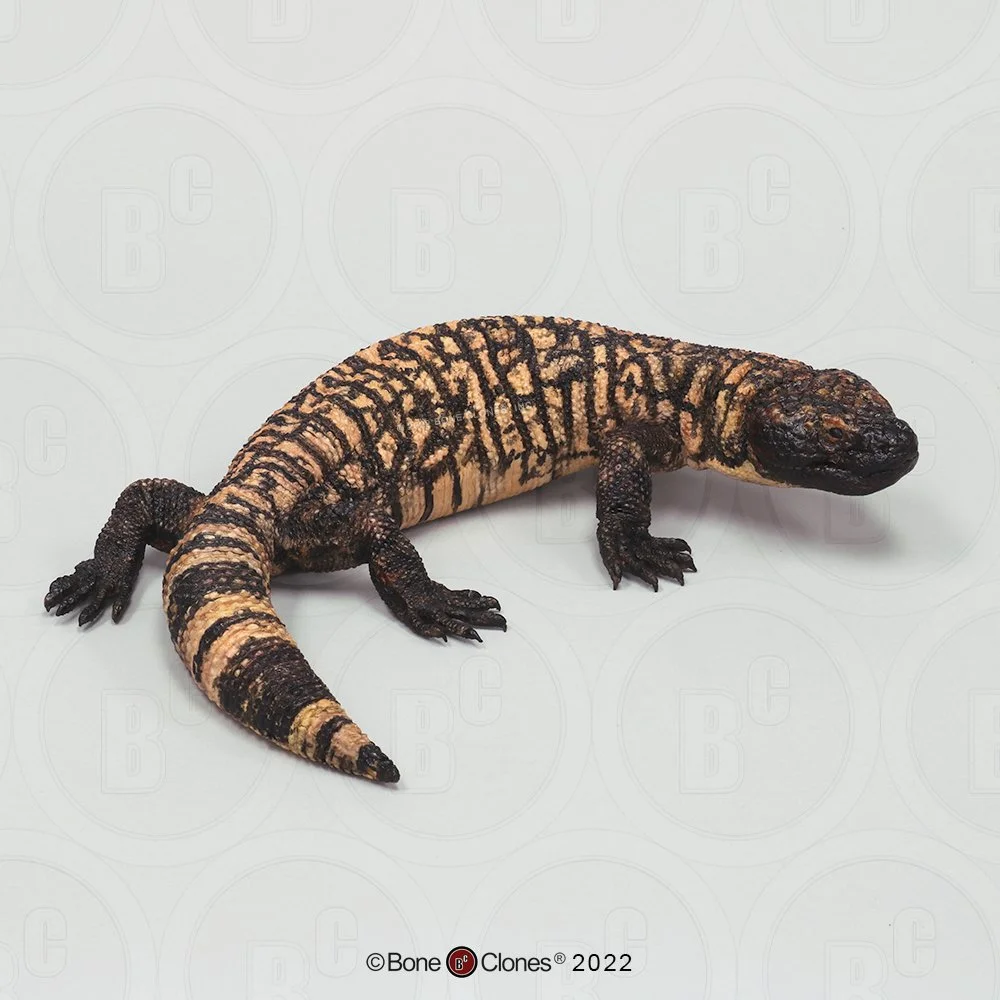
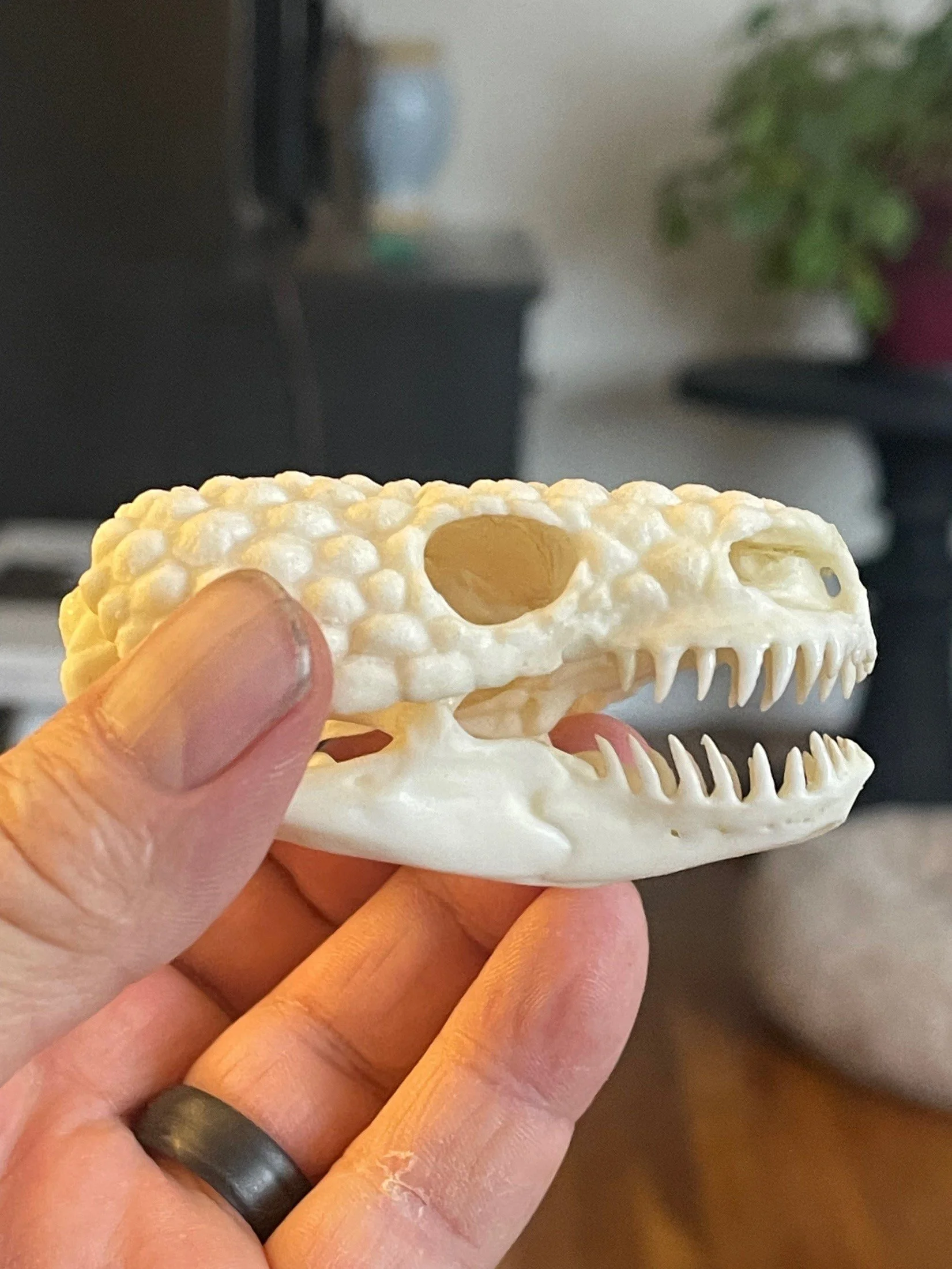
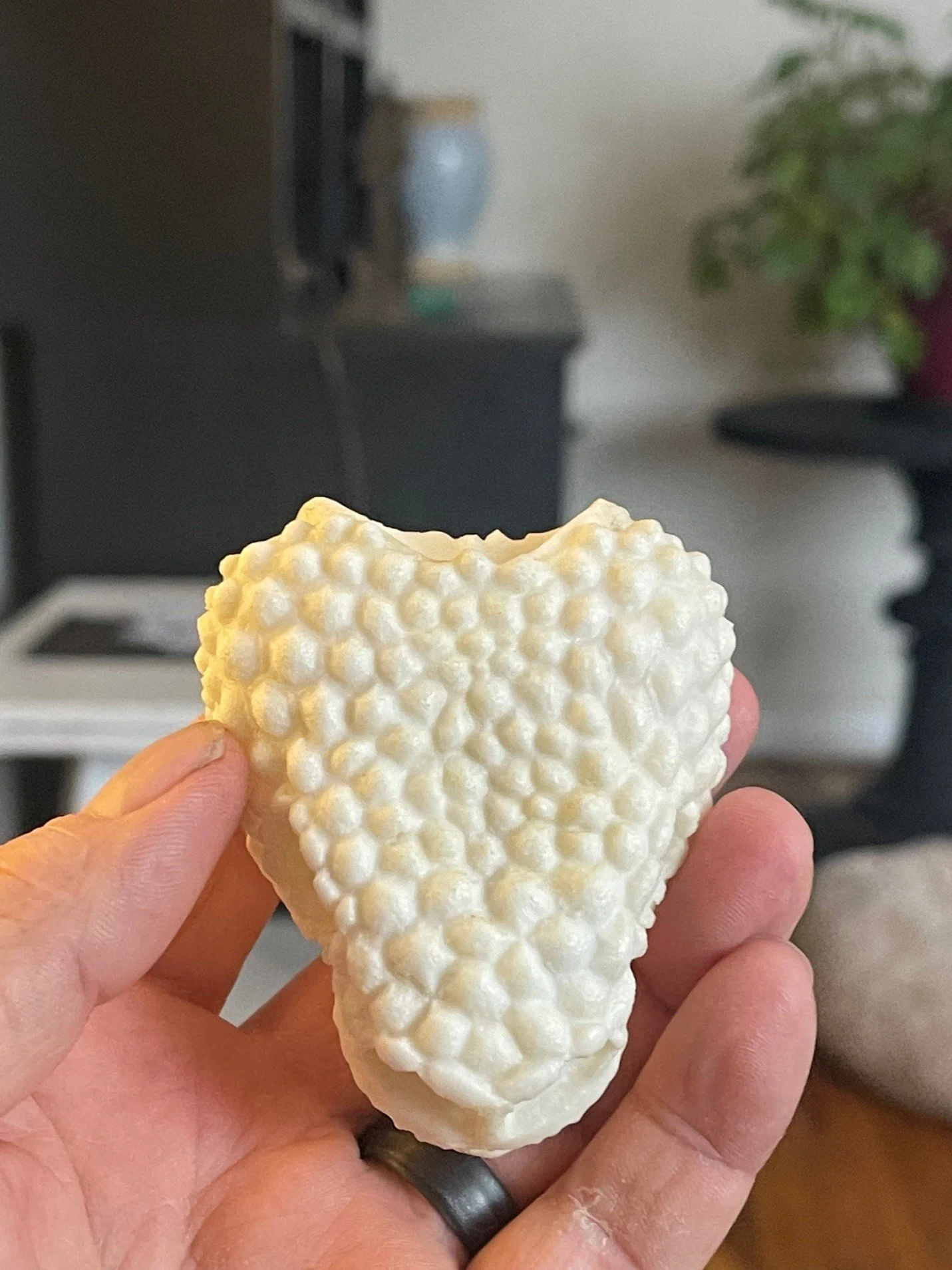
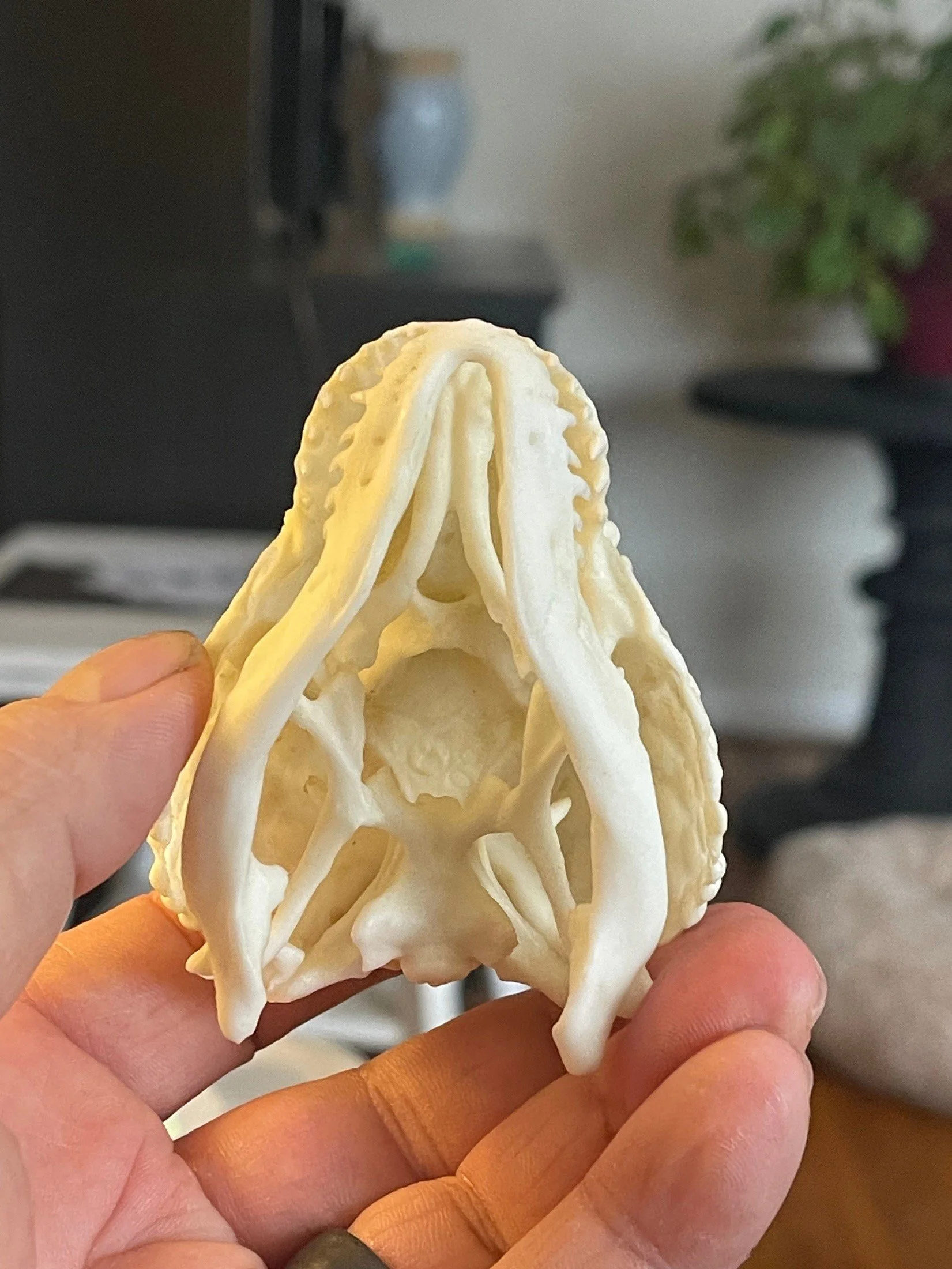
Gila monster
The venom of a gila monster is a cocktail of 6 poisons, each helping to incapacitate its victim.
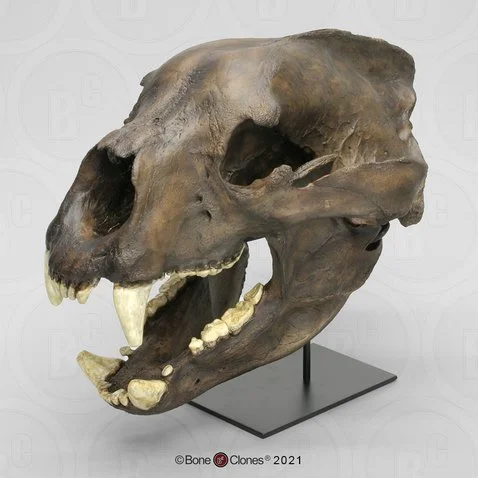
Short-faced Bear Skull
This skull was cast from a bear found in a cave in Alaska. It stood 12’ tall on it’s hind feet
The Fastest Running Bear That Ever Lived
Also called the bulldog bear, the giant short-faced bear (Arctodus simus) was undoubtedly the fastest running bear that ever lived. Rangier and longer legged than any bear today, it was about five feet at the shoulders when walking and stood as tall as 12 feet on its hind legs. Unlike pigeon-toed modern bears, its toes pointed straight forward, enabling it to walk with a fast, purposeful gait. It probably could run over 40 miles per hour despite weighing over 1500 pounds.
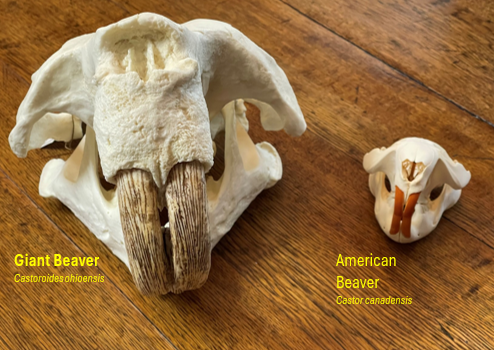
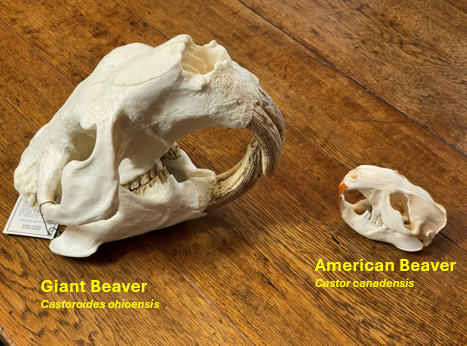
Giant beaver
Extinct Giant beaver ranged from Alaska to Florida. This skull is the largest and most complete
Skull found so far.
Extant American beaver ranges from Alaska through much of Canada South to Florida
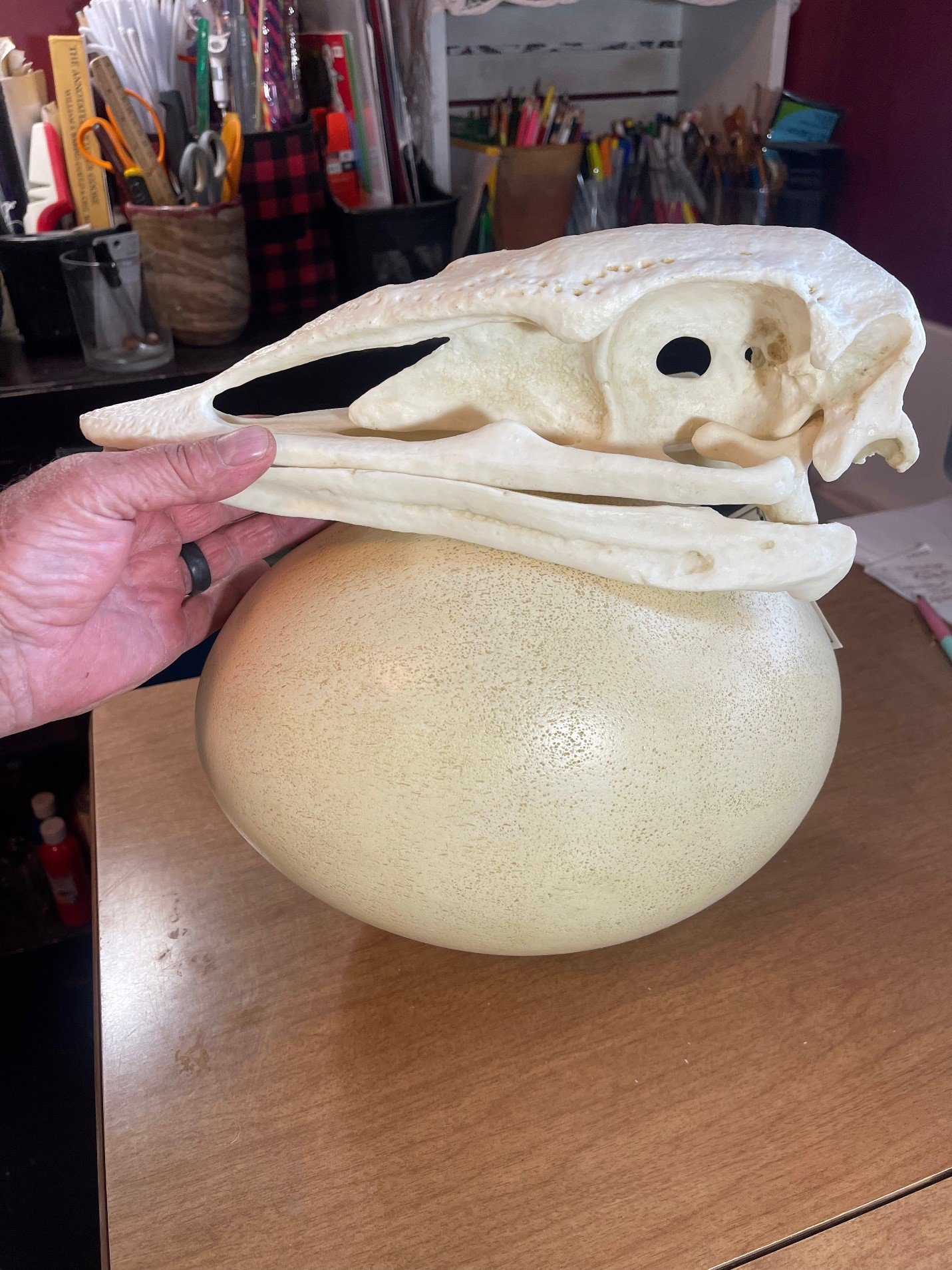
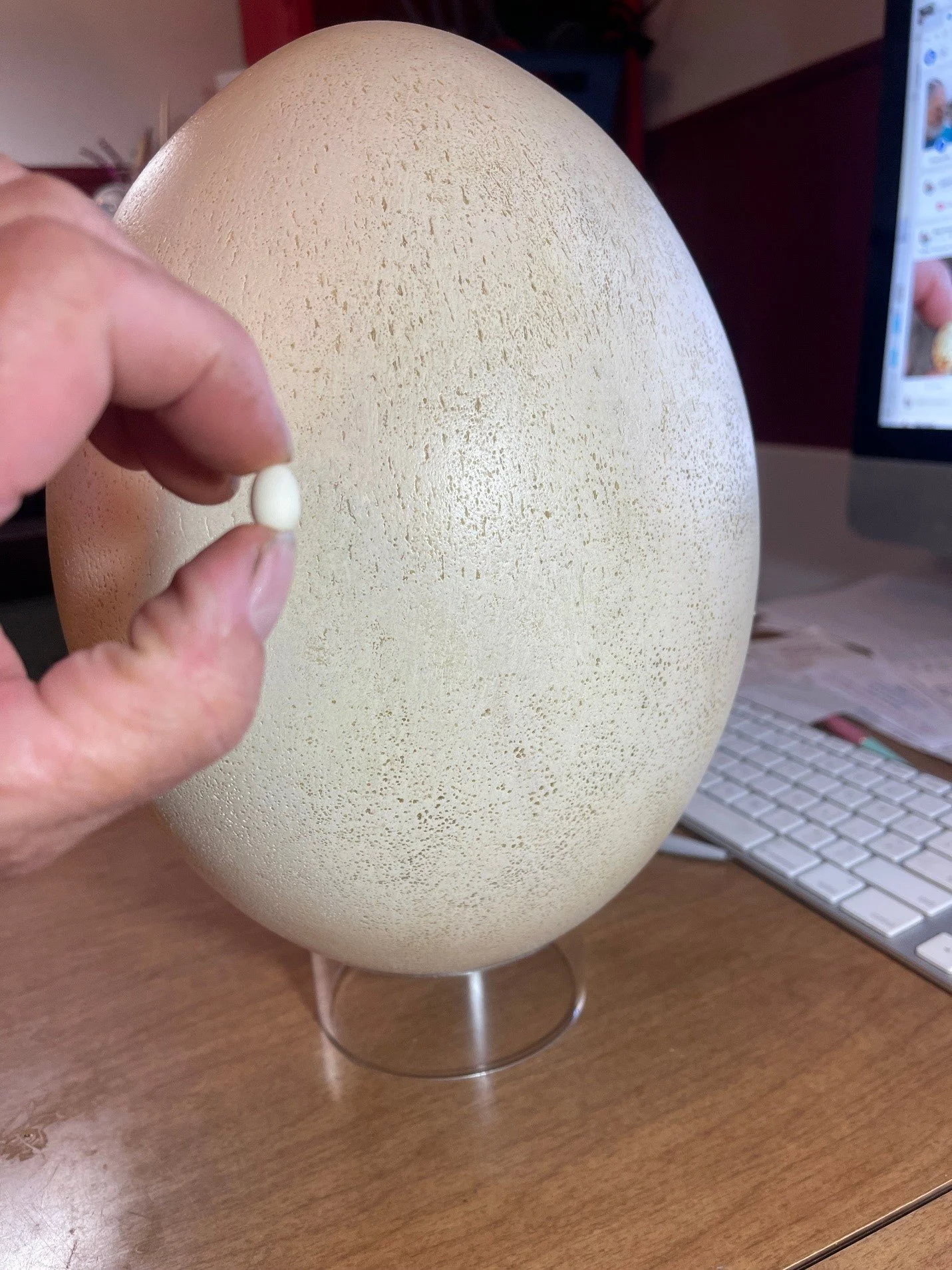
Fossil Giant Elephant Bird Egg and skull
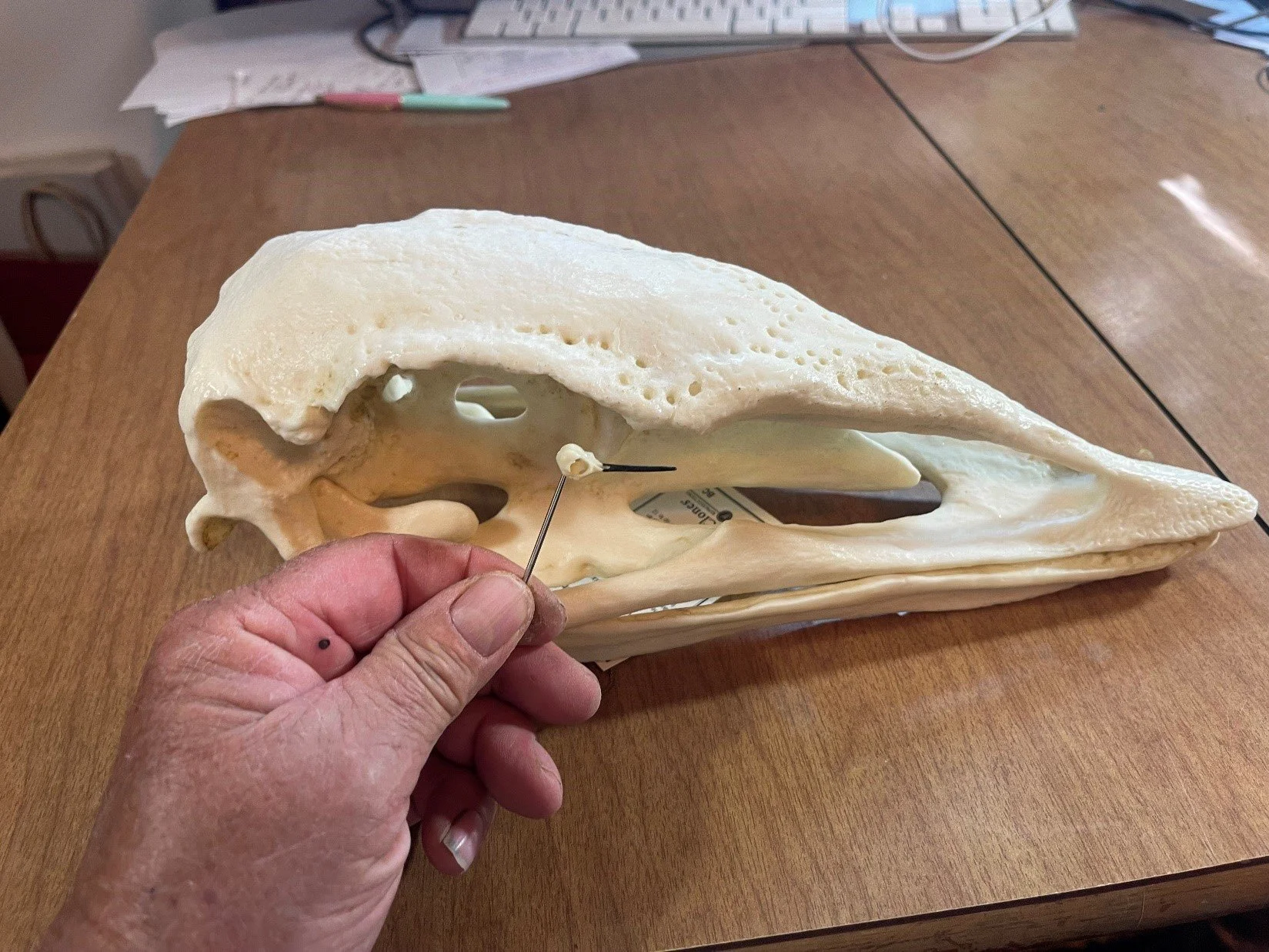
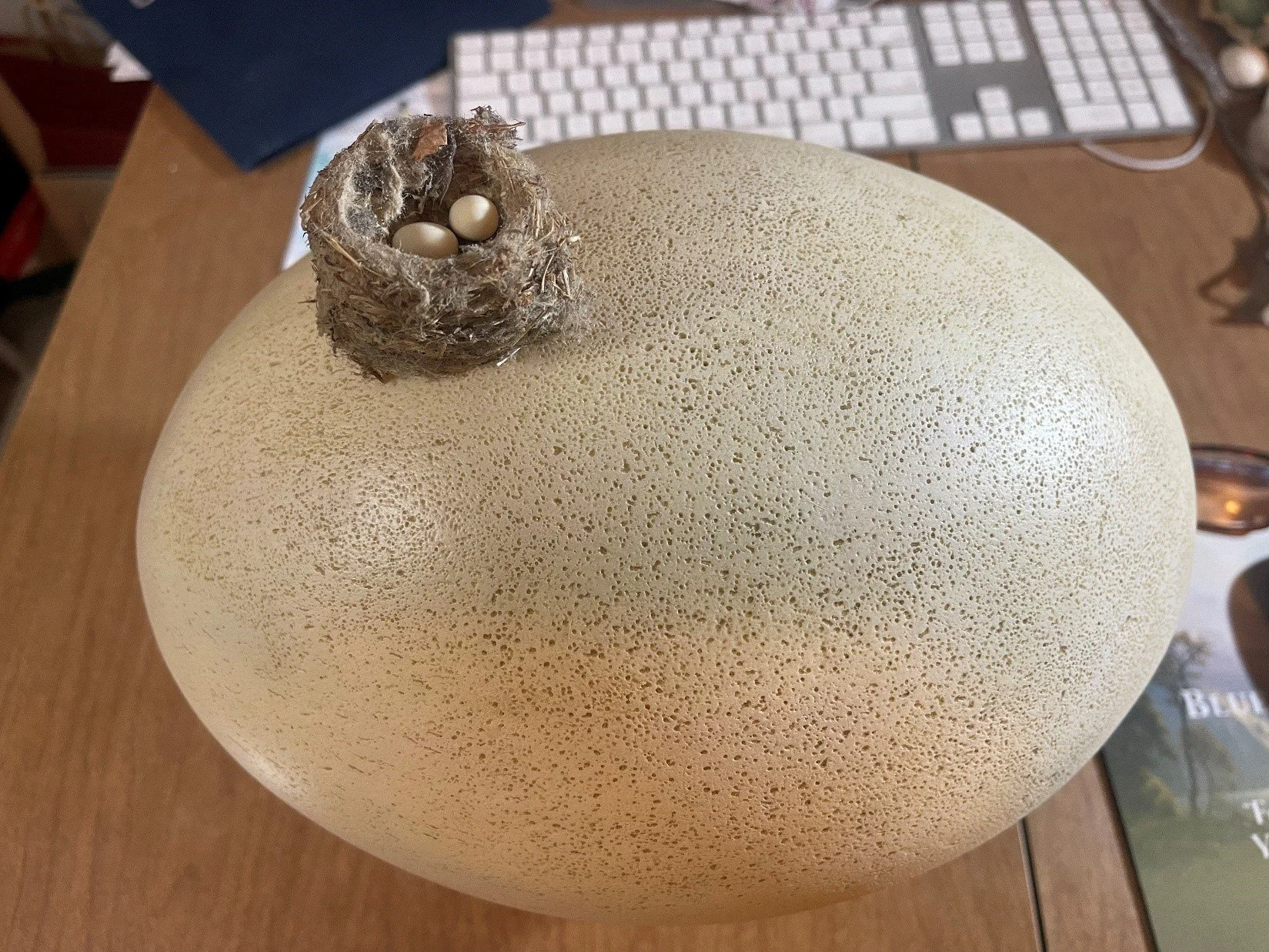
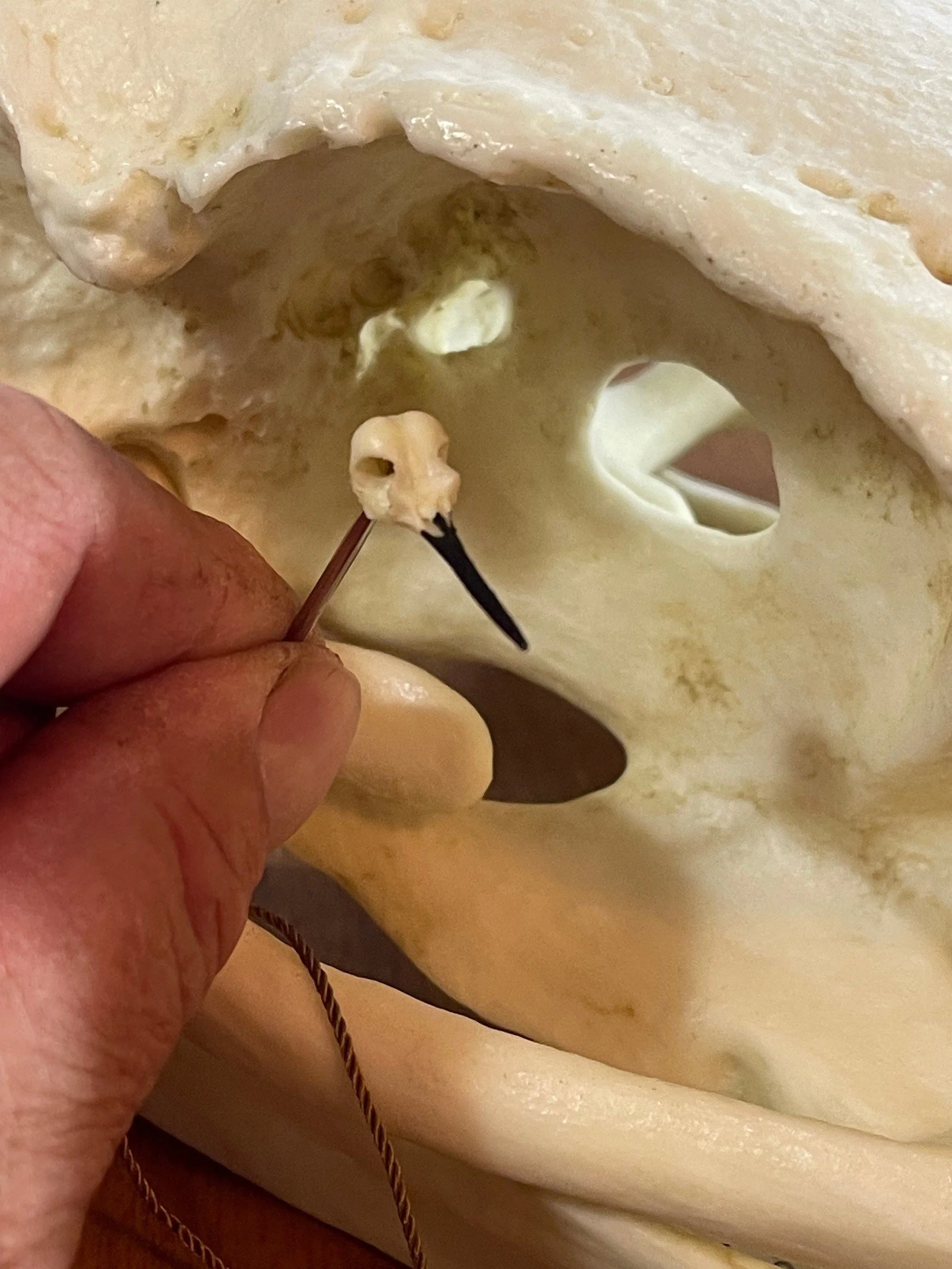
Ruby-throated Hummingbird Skull and Egg
The giant elephant bird egg is the largest known bird egg. Its bulk is 15 times larger than an ostrich egg and 10,000 times larger than a hummingbird egg.
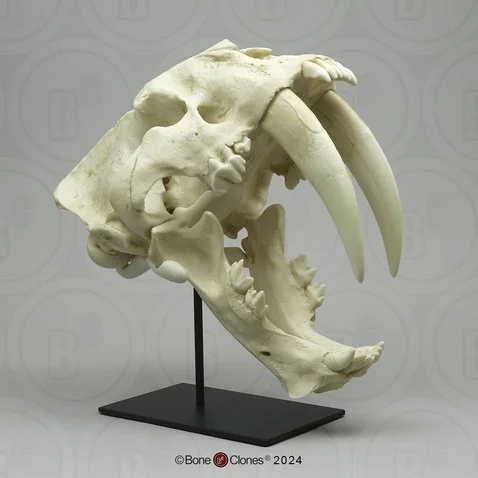
Smilodon (Sabertooth cat)
Smilodon populator lived in the eastern part of South America.
The other two species are S. gracilis, which was found in the eastern part of the United States, and S. fatalis, found in both North America and the Pacific coastal area of South America. Smilodon populator was the largest species.
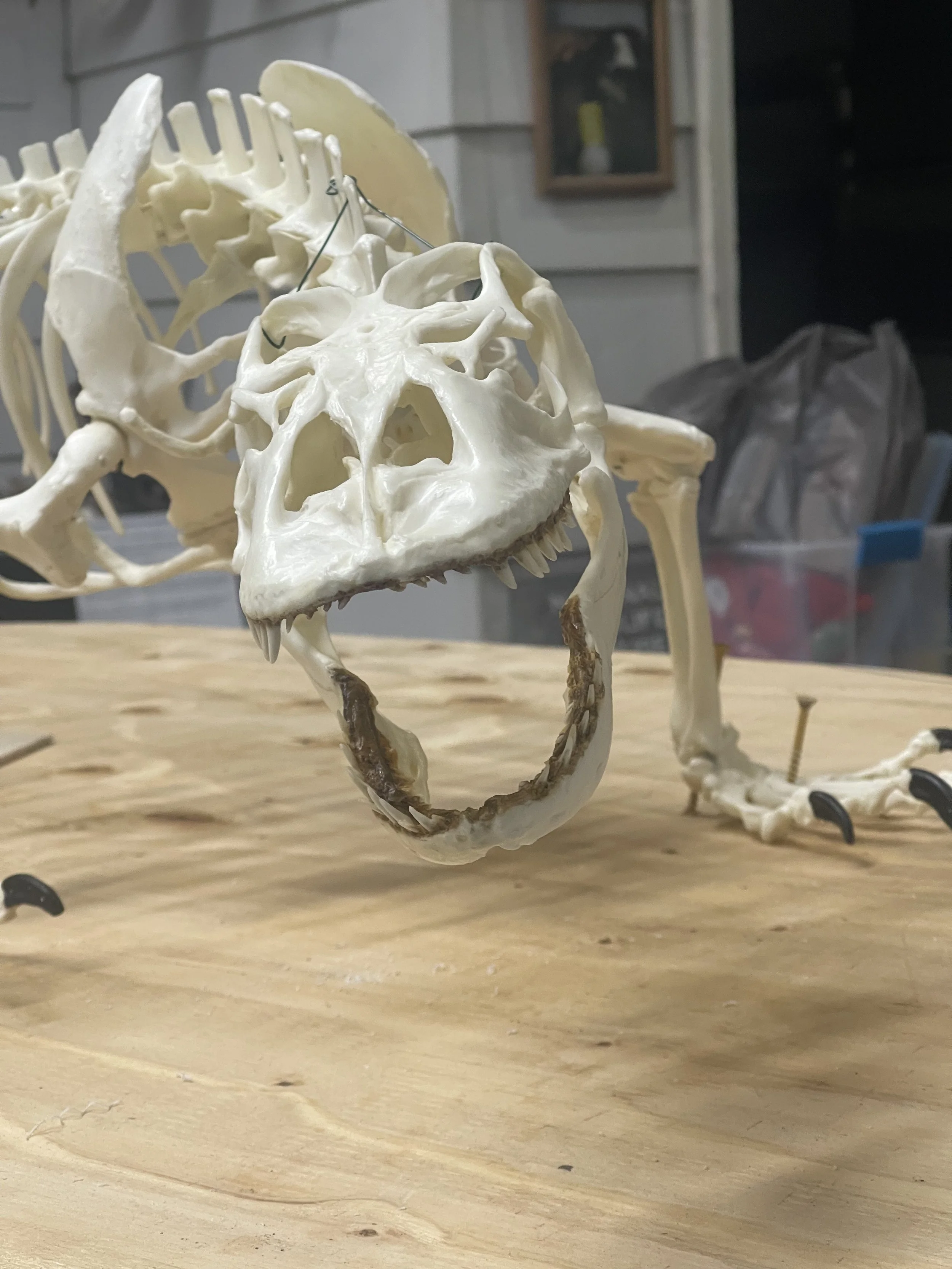
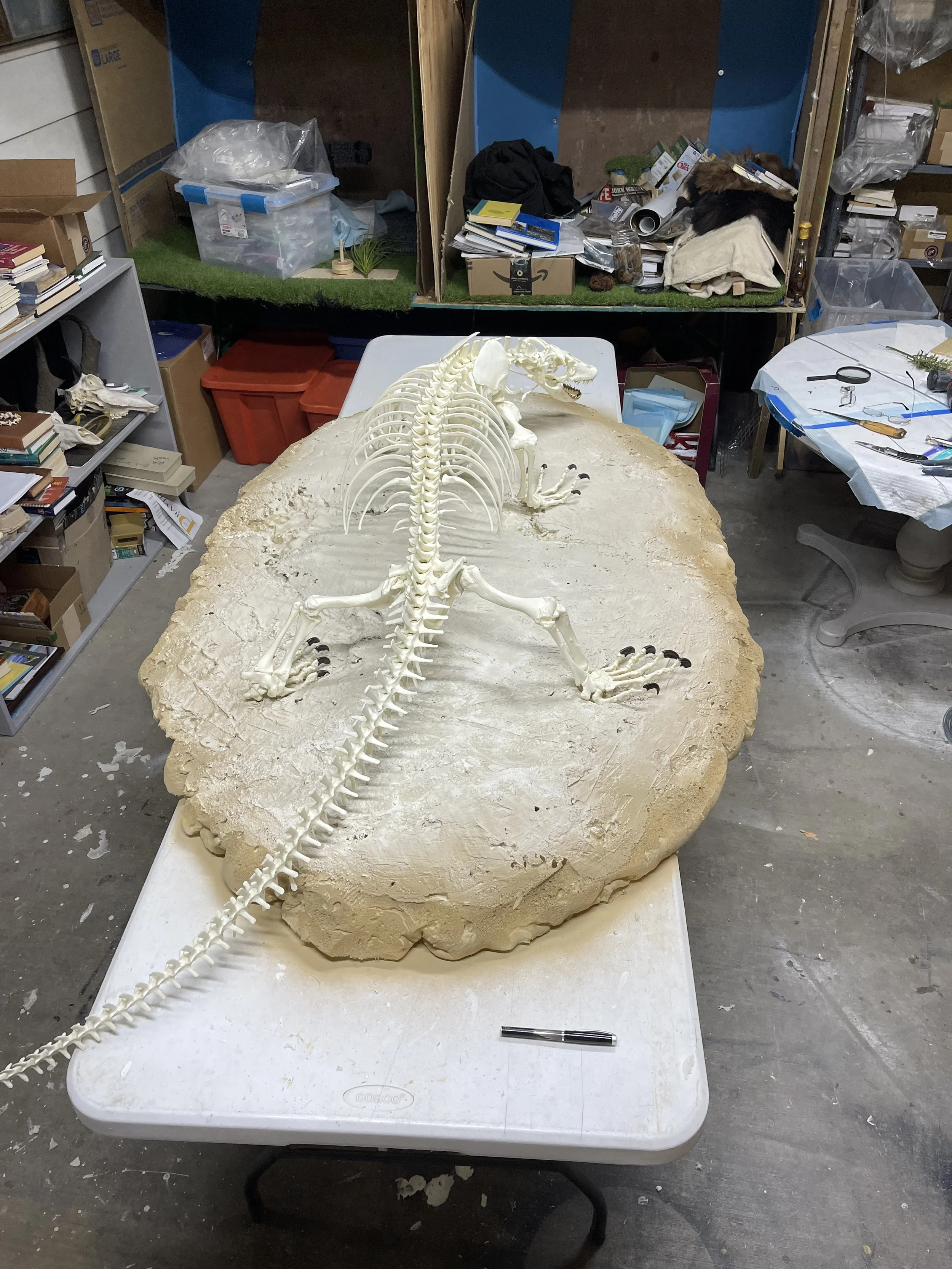
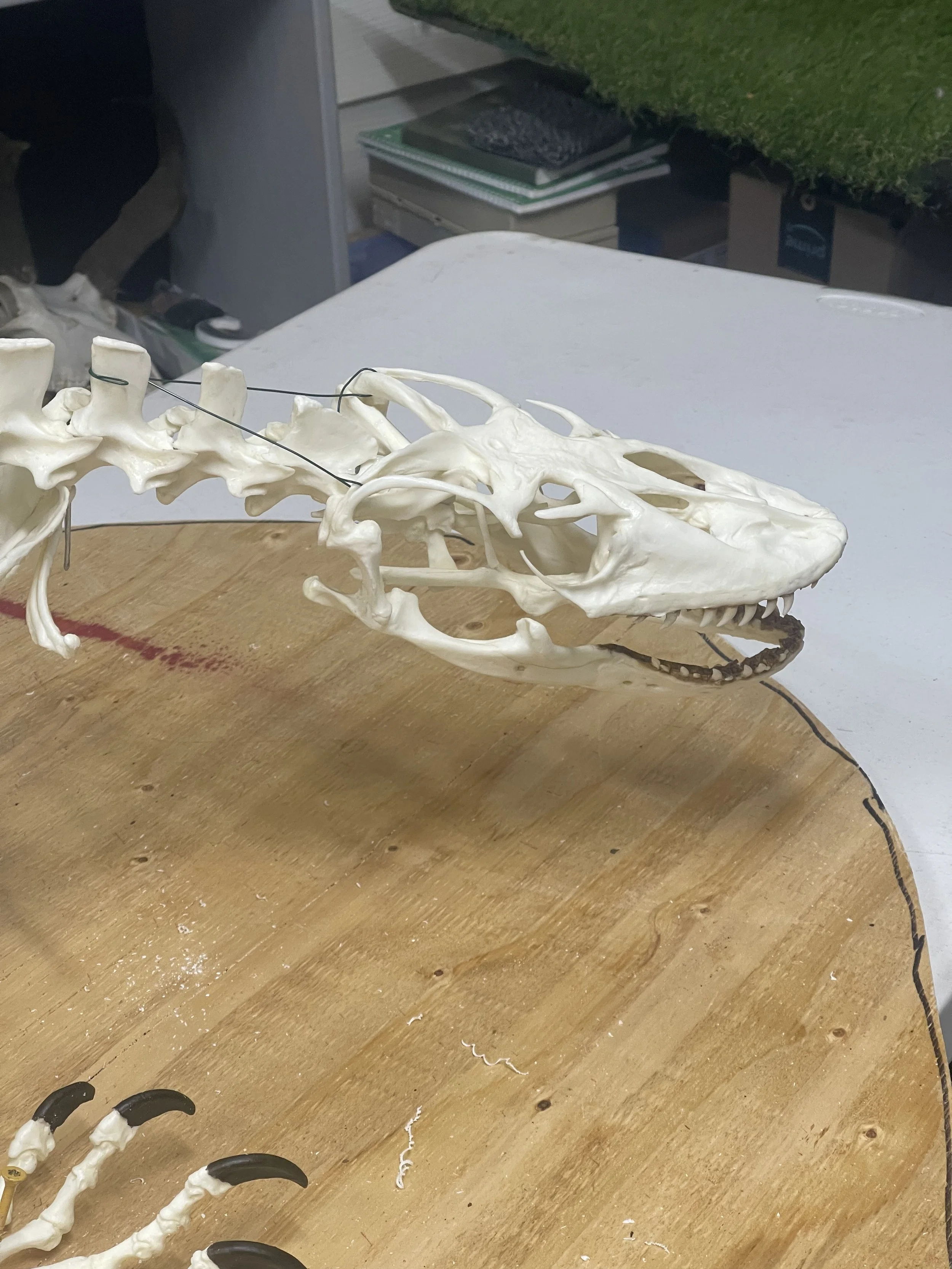
Komodo Dragon
A civil administrator found ‘mythical’ creatures living on a tiny Indonesian island. Could such creatures ever have evolved?
The reports sounded fanciful. Local farmers and fishermen told stories of huge reptiles up to eight metres (26 feet) long living in the dense jungles of a few tiny Indonesian islands.
Some pearl divers said they shot several monsters which were close to this length. These giant reptiles allegedly could kill a wild pig or deer with a few rapid swipes of their tail. But even more unbelievable were the claims that these ‘dragons’ arose from deep under the ground, and that some lived in the trees. Naturalists dismissed the stories as imaginative nonsense.
It wasn’t until 1910, when the civil administrator on one of Indonesia’s islands, Lieutenant van Steyn van Hensbrock, obtained specimens of the ‘dragons’ from the island of Komodo, that the outside world began receiving credible confirmation of the existence of these creatures.
Specimens of these ‘Komodo dragons’ were sent for study to the zoo on the nearby island of Java. Most of the earlier details, which had been thought to be fantastic, turned out to be true.
Investigation of the creatures over subsequent years revealed some amazing characteristics. Komodo dragons bury their eggs as deep as nine metres (30 feet) underground. The mother lays up to 30 huge eggs at a time. When the young dragons hatch, they begin their long journey up to the surface of the ground, then they climb trees—where they live the early portion of their lives.
These characteristics parallel two legendary traits attributed to ‘mythical’ dragons—their reputation for living inside the Earth, and their ability to fly. These qualities led two authors to comment: ‘They cannot spit fire, of course, but no one who has seen a Komodo Dragon can be in any doubt that such legendary beasts (or something like them) could once have existed.’1
Many historians believe that the famous depictions of Chinese dragons were modelled after creatures like the Komodo dragon because its long, forked, yellow-orange tongue looked like wisps of fire.2
World’s largest lizards!
Komodo facts
Komodo dragons are found on only four Indonesian islands—Komodo, Flores, Rinja and Padar. Padar is a small mass of volcanic rock on which Komodo dragons survive by digging out sea-turtle eggs.
Young Komodo dragons are skillful and rapid tree-climbers. Often, one- or two-meter-long dragons can be seen perched in trees preying on monkeys.
San Diego Zoo official, Dr John Phillips, once lamented that little help is given to saving reptiles, because they are not cuddly and they are not important for medical research.
Fossil remains of a lizard (Varanus priscus) similar to the Komodo dragon have been found in Australia which reached an incredible nine metres (30 feet)!
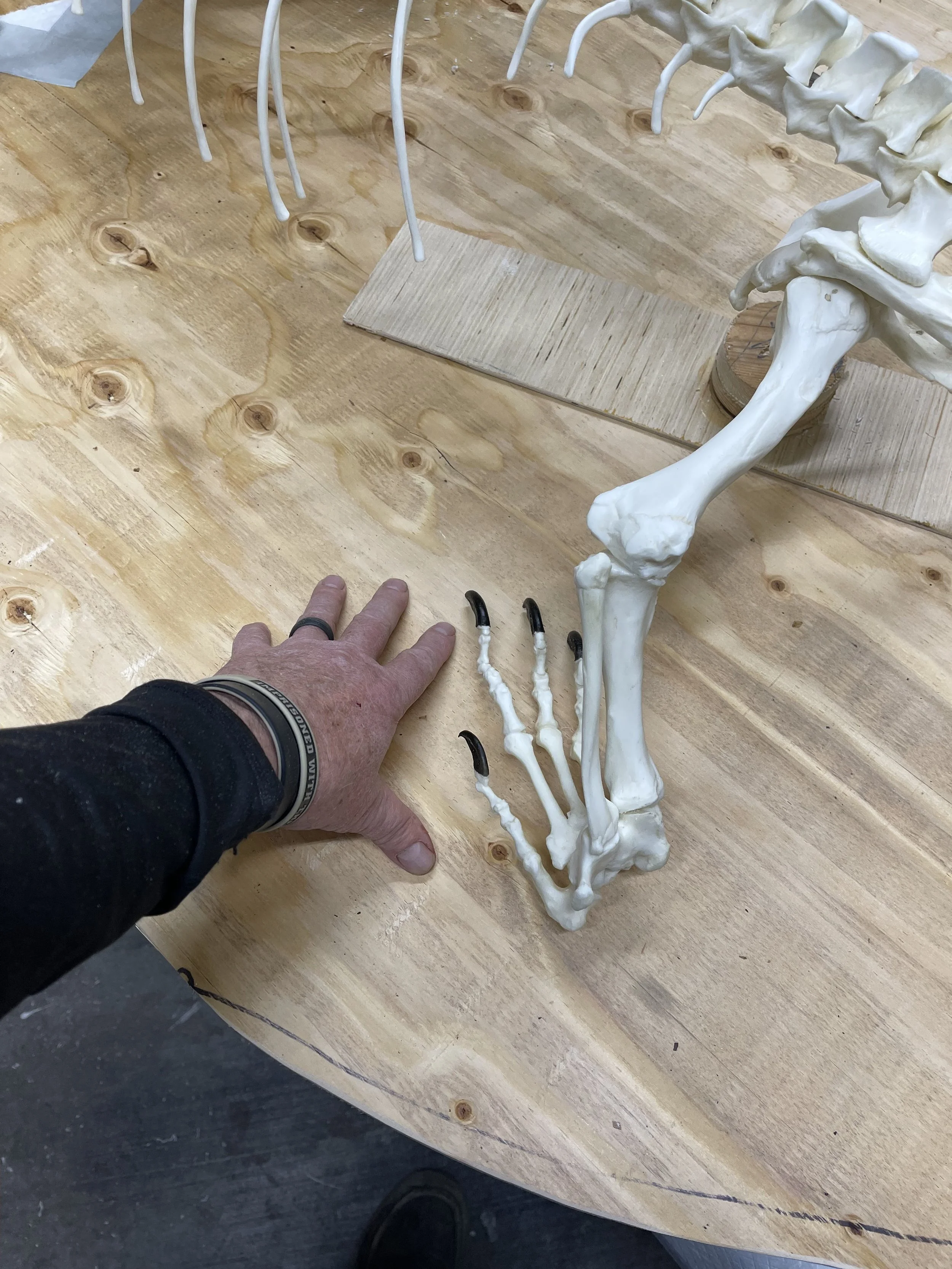
Komodo dragons today can grow to three metres (10 feet) long and are the largest lizards on Earth, although the biggest specimens were hunted and killed before the Indonesian Government set up its current protection policy.
Komodos are a species of monitor lizard, which includes the Australian goanna, a lizard similar to the Komodo dragon but which rarely reaches lengths of more than two metres (over six feet).
There were even more colossal specimens in the past. Just as many creatures living in the environment before Noah’s Flood seemed to reach huge sizes, fossils of gigantic monitors have been discovered which show that today’s isolated colonies have come from much larger and more wide-ranging monitors of earlier times.
Fossils of Varanus, the lizard group to which Komodo dragons belong, give no indication that these giant reptiles evolved from any other type of creature. One source says that the group was already ‘differentiated’ from other lizards ‘60 million years ago’.3 Another claims that fossils ‘strikingly similar’ to Komodo dragons have been dated up to ‘130 million years ago’ on the evolutionary timescale.4
Today, Komodo dragons are disappearing. Only a few thousand now survive in Indonesia, and they have become rarer than pandas in the world’s wildlife sanctuaries. In zoos, they have to be kept in special large enclosures, with glazed plastic surroundings that maintain the temperature at 38 degrees Celsius (100 degrees Fahrenheit).
Even with this special care, a comparative physiologist at San Diego Zoo, Dr John Phillips, once admitted that it is rare to find a zoo dragon living beyond 25 years.5 In the wild, it is possible they live 100 years or more.6
Evolution problems
While the alleged evolution of Komodo dragons and other monitors seems fanciful, it should be kept in mind that the supposed evolution of reptiles from amphibians is even more difficult for the theory of evolution to explain.
For a water-loving amphibian to change into a land-dwelling reptile, at least two major life-affecting changes would be needed.
The first has to do with the skin. An amphibian’s skin lacks protective devices to stop it from desiccating, or drying out. This forces it to reside in water or in very humid places. (Some amphibians have a type of scale in their skin, but these are thin, and offer no protection against drying out.) Reptiles have a different type of scale altogether—made of keratin, or horn—which lies in the outer layer of their skin and is tough enough to prevent desiccation.7
There is no convincing evidence from either biology or fossils that such a transformation took place.
The second major barrier to an amphibian’s turning into a reptile has to do with eggs. An amphibian, hatching from an aquatic egg, develops in water in the larval form known as a tadpole. Reptiles, however, are born with all the functioning structures of an adult. This applies even to marine reptiles. They do not develop gills, or the series of sense organs needed by a tadpole, which must be resorbed and reworked into other structures in the transformation to an adult.
How such remarkable evolutionary changes supposedly took place has never been satisfactorily demonstrated.
It is conceivable that creatures like Komodo dragons, or even some similar-looking types of dinosaurs, were the models for Chinese dragon portrayals. But what is more certain is that there is no indisputable evidence that reptiles, the larger scientific category to which Komodo dragons belong, have evolved from non-reptiles. This makes the alternative explanation—that all groups of reptiles were created by God—the most credible option.